- 1Understand the vagus nerve's role in regulating the autonomic nervous system, impacting stress, inflammation, and gut health crucial for fertility.
- 2Discover natural methods like deep breathing, meditation, and cold exposure that can enhance vagal tone and promote a calmer state.
- 3Recognize the profound connection between your gut microbiota and vagus nerve function, influencing both mental well-being and inflammatory responses.
- 4Learn how modulating your vagal tone can positively influence conditions often linked to fertility challenges, such as anxiety and inflammation.
The Vagus Nerve and Fertility: A Simple Guide to Calming Your Nervous System
Embarking on a fertility journey can feel like navigating a complex maze. It is a path often filled with uncertainty, emotional ups and downs, and a constant search for answers. We know how overwhelming it can be when you feel isolated and confused, grappling with the physical and emotional toll that trying to conceive can take on your body and mind. At Izana, we believe you deserve clarity, compassion, and empowering knowledge.
Today, we are going to demystify a powerful internal connector you might not know much about: the vagus nerve. This vital nerve plays a much larger role in your overall well-being and, importantly, your reproductive health than you might imagine. Understanding how to support it can be a truly transformative step in your journey.
Here is a quick look at what we will cover:
- We will explore the anatomy and profound functions of the vagus nerve, revealing its central role in your body's calm response.
- We will understand the powerful connection between your brain, gut, and fertility, and how the vagus nerve acts as their primary communicator.
- We will shed light on how chronic stress and inflammation can hinder fertility, and how optimizing vagal tone can offer a path forward.
- We will discover evidence-based, natural techniques you can adopt today to stimulate your vagus nerve and foster a sense of calm.
- We will empower you with knowledge to take charge of your nervous system, improving your overall health and supporting your reproductive goals.
Introduction to the Vagus Nerve
Imagine a superhighway running through your body, connecting your brain to almost all your major organs. That is essentially your vagus nerve. It is the longest cranial nerve, a true wanderer that extends from your brainstem down through your neck, chest, and abdomen, reaching your heart, lungs, and most importantly for our discussion, your digestive system and reproductive organs. It is a crucial component of your autonomic nervous system, the part of your nervous system that works automatically, without you even thinking about it.
When we talk about calming your nervous system, we are primarily referring to activating your parasympathetic nervous system, and the vagus nerve is its main operator. Think of it as your body's internal brake pedal, slowing things down after a stressful event and promoting a state of "rest and digest." In the context of fertility, persistent stress can keep your body in a chronic "fight or flight" mode, which diverts energy away from non-essential functions like reproduction. By understanding and gently stimulating your vagus nerve, we can help shift your body into a more receptive and fertile state.
Anatomy and Functions of the Vagus Nerve
The vagus nerve, often called the "wandering nerve," is actually a pair of nerves, one on each side of your body. It is a mixed nerve, meaning it carries both motor and sensory signals. About 80% of its fibers are afferent, sending information from your organs up to your brain. This means your brain is constantly receiving updates about your internal state, influencing your mood, stress levels, and even decision-making.
Role in Autonomic Nervous System
The autonomic nervous system has two main branches: the sympathetic, responsible for "fight or flight" responses, and the parasympathetic, which governs "rest and digest" functions. The vagus nerve is the principal nerve of the parasympathetic nervous system. It helps regulate essential bodily functions such as heart rate, breathing, digestion, and even immune responses. When your vagus nerve is effectively engaged, it promotes relaxation, reduces inflammation, and improves overall physiological balance. This balance is incredibly important when you are trying to conceive, as a constantly stressed system struggles to prioritize reproductive health.
Connection to the Enteric Nervous System and Brain-Gut Axis
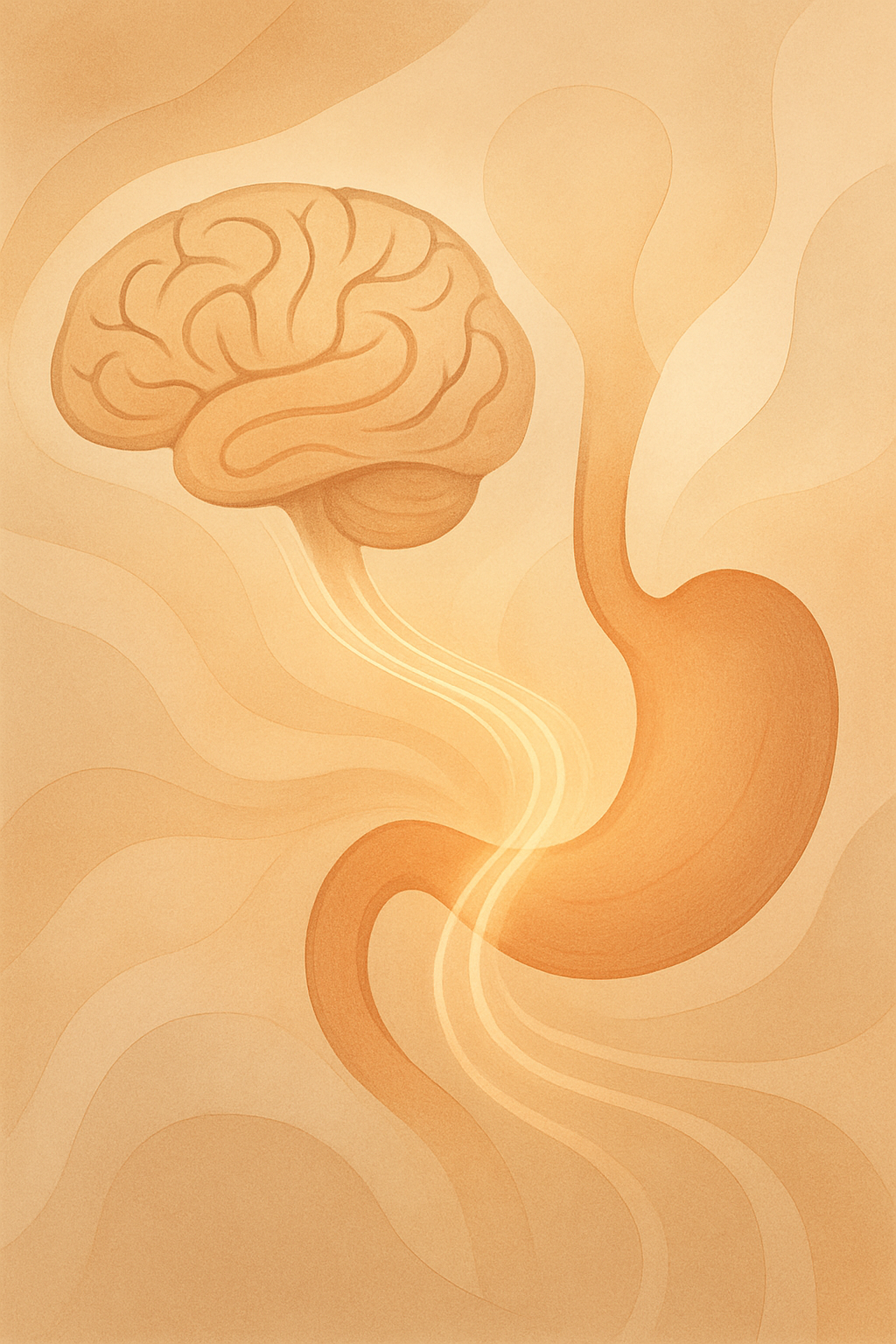
One of the most fascinating aspects of the vagus nerve is its profound connection to your gut. It forms a direct communication pathway between your brain and your gastrointestinal tract, often referred to as the brain-gut axis. Your gut, sometimes called your "second brain," contains its own intricate network of neurons known as the enteric nervous system. The vagus nerve is the primary conduit through which these two "brains" communicate.
This connection is vital because your gut microbiota, the trillions of microorganisms living in your intestines, play a significant role in producing neurotransmitters like serotonin, which impacts your mood. A healthy gut environment, supported by a well-functioning vagus nerve, can lead to better nutrient absorption, reduced inflammation, and improved mental health, all of which are foundational for fertility.
Vagus Nerve Stimulation (VNS)
Vagus nerve stimulation, or VNS, is a technique used to activate the vagus nerve to treat various medical conditions. It can be broadly categorized into medical devices and natural methods.
Medical Devices and Methods (Invasive and Non-invasive)
Historically, VNS has involved surgical implantation of a device, similar to a pacemaker, that delivers electrical pulses to the vagus nerve in the neck. This invasive method is primarily used for conditions like epilepsy and treatment-resistant depression (Howland & Bhadra, 2015).
More recently, non-invasive VNS (nVNS) devices have emerged. These devices stimulate the vagus nerve externally, typically through the skin on the neck or ear. They are being explored for conditions ranging from migraines to inflammatory disorders, offering a less intrusive way to modulate vagal activity. While these are primarily clinical tools, understanding their mechanism helps us appreciate the power of vagal modulation.
Neural Mechanisms of VNS
When the vagus nerve is stimulated, it sends signals up to the brain, influencing brain regions involved in mood, stress, and pain perception. It also triggers the release of neurotransmitters such as acetylcholine, which has anti-inflammatory effects throughout the body. This is known as the cholinergic anti-inflammatory pathway. By reducing systemic inflammation, VNS can indirectly create a more favorable environment for reproductive health.
Vagus Nerve and Psychiatric Disorders
The vagus nerve's influence extends deeply into our mental health, playing a critical role in regulating emotions and stress responses.
Depression and VNS
For individuals struggling with depression, particularly those who have not responded to traditional treatments, VNS has shown promise. By influencing neurotransmitter activity and brain plasticity, VNS can help improve mood and reduce depressive symptoms. A calmer, more balanced mental state is undoubtedly beneficial when navigating the emotional challenges of a fertility journey.
PTSD and VNS
Post-traumatic stress disorder (PTSD) is characterized by a dysregulated nervous system. Research suggests that VNS, by promoting parasympathetic activity, can help restore balance to the autonomic nervous system, potentially reducing hyperarousal and anxiety symptoms associated with PTSD. This highlights the vagus nerve's role in helping the brain process and regulate traumatic memories.
Anxiety and Stress Regulation
Perhaps most relevant to our discussion, the vagus nerve is central to anxiety and stress regulation. A well-functioning vagus nerve, indicated by high vagal tone, means your body can recover more quickly from stress. When we are stressed, our hypothalamic-pituitary-adrenal (HPA) axis is activated, releasing cortisol. A healthy vagus nerve can dampen this stress response, preventing chronic elevated cortisol levels which can interfere with reproductive hormones and ovulation. By enhancing vagal tone, we can create a more resilient system, better equipped to handle the emotional demands of trying to conceive.
Vagus Nerve and Inflammatory Disorders
Chronic inflammation is a silent enemy of fertility, often linked to conditions like PCOS, endometriosis, and unexplained infertility. The vagus nerve offers a powerful pathway to combat this.
Inflammatory Bowel Disease (IBD)
Conditions like Inflammatory Bowel Disease (IBD) are prime examples of the vagus nerve's role in inflammation. Studies have shown that VNS can reduce inflammation in the gut of IBD patients by activating the cholinergic anti-inflammatory pathway. This pathway signals immune cells to reduce the production of pro-inflammatory cytokines, which are molecules that drive inflammation (Bonaz, Sinniger & Pellissier, 2016).
Given the strong connection between gut health, systemic inflammation, and fertility, insights from IBD research are highly relevant. Reducing inflammation throughout the body can create a more optimal environment for conception and a healthy pregnancy.
Immunomodulation and Anti-inflammatory Pathways
The vagus nerve is a key player in immunomodulation, meaning it can regulate the immune system. Through its release of acetylcholine, it can suppress the inflammatory response. Chronic inflammation can disrupt hormonal balance, impair egg quality, and interfere with implantation. By strengthening your vagal tone, you are essentially giving your body a natural tool to manage and reduce inflammation, which is a significant step towards improving reproductive outcomes.
Nutrition, Microbiota, and Vagus Nerve
What you eat directly impacts your gut microbiota, and in turn, your vagus nerve function.
Probiotics and Gut-Brain Interaction
The billions of bacteria in your gut communicate with your brain via the vagus nerve. Probiotics, beneficial bacteria often found in fermented foods or supplements, can positively influence this communication. Certain probiotic strains have been shown to enhance vagal activity, improve mood, and reduce anxiety by influencing neurotransmitter production in the gut. For example, some probiotics can increase levels of gamma-aminobutyric acid (GABA), a calming neurotransmitter.
Therefore, nourishing your gut with a diverse, fiber-rich diet and considering probiotic-rich foods can indirectly strengthen your vagus nerve and promote a calmer internal state.
Nutritional Influence on Psychiatric and Inflammatory Conditions
A diet rich in whole foods, fruits, vegetables, and healthy fats supports both gut health and overall brain function. Conversely, processed foods, high sugar intake, and unhealthy fats can lead to gut dysbiosis and increased inflammation, which can negatively impact vagal tone and exacerbate conditions like anxiety and chronic inflammation. Focusing on anti-inflammatory foods can be a powerful strategy to support your vagus nerve and, by extension, your fertility journey.
Natural and Lifestyle Methods to Stimulate the Vagus Nerve
The good news is you do not need medical devices to stimulate your vagus nerve. Many simple, everyday practices can help.
Breathing Techniques
Deep, slow, diaphragmatic breathing is one of the quickest ways to activate your vagus nerve. When you exhale slowly and deeply, you stimulate your vagus nerve, signaling your body to relax. Try inhaling for a count of 4, holding for 2, and exhaling slowly for a count of 6. Practicing this for just a few minutes daily can significantly improve your vagal tone and reduce stress.

Meditation, Yoga, and Relaxation
These practices are well-known for promoting relaxation and reducing stress, and a key reason for their effectiveness is their positive impact on the vagus nerve. Mindfulness meditation encourages present moment awareness, reducing the mind's tendency to ruminate on worries. Yoga combines physical postures, breathing, and meditation, all of which work synergistically to enhance vagal activity. Regular practice can lead to sustained improvements in vagal tone and overall mental well-being.
Cold Exposure and Other Physical Hacks
Brief exposure to cold can be a powerful vagal stimulant. Splashing cold water on your face, taking a cold shower, or even just exposing yourself to cooler temperatures can activate your vagus nerve. This sudden cold sensation triggers your body's "dive reflex," which slows your heart rate and activates the parasympathetic system. Other physical hacks include gargling vigorously, which stimulates the muscles innervated by the vagus nerve in your throat.
Sound-Related Stimulations (Humming, Gargling, Singing)
The vagus nerve passes near the vocal cords and muscles in the throat. Activities that vibrate these areas can stimulate it. Humming, singing, and gargling are simple, accessible ways to do this. Singing loudly or humming a tune can create vibrations that resonate through the neck and chest, gently stimulating the vagus nerve and promoting a calming effect. Gargling with water until your eyes tear up is another effective, albeit sometimes intense, way to engage the vagus nerve.
Measuring Vagal Tone and Health Indicators
While you might feel the effects of a stimulated vagus nerve as a sense of calm, there are also ways to objectively measure its activity.
Heart Rate Variability (HRV)
Heart Rate Variability (HRV) is considered a key indicator of vagal tone and overall health. HRV measures the variation in time between your heartbeats. A higher HRV generally indicates a healthier, more adaptable autonomic nervous system with good vagal tone. This means your body can respond effectively to stress and recover quickly. Wearable devices and smartphone apps can track HRV, giving you insights into your nervous system's resilience. Monitoring your HRV can provide a personalized feedback loop, showing you how your lifestyle choices impact your vagal tone.
Vagus Nerve in Women’s Health
The vagus nerve plays a significant, though often overlooked, role in women's health, particularly concerning fertility. Chronic stress, through its impact on the HPA axis, can disrupt the delicate balance of reproductive hormones, potentially affecting ovulation, menstrual regularity, and overall fertility. By enhancing vagal tone, women can better manage stress, reduce systemic inflammation, and support a more harmonious hormonal environment conducive to conception.
Conditions like PCOS and endometriosis, often linked with inflammation and stress, may also see benefits from improved vagal function. The vagus nerve's ability to modulate immune responses and reduce inflammatory cytokines means it can help create a less hostile environment for reproductive processes. Furthermore, the brain-gut axis influence on mood and mental health is paramount for women navigating the emotional rollercoaster of fertility treatments and trying to conceive.
Practical Guidelines and When to Seek Professional Care
Incorporating vagus nerve stimulating practices into your daily routine is a gentle, empowering step. Start small:
- Dedicate 5-10 minutes daily to deep breathing or meditation.
- Try splashing cold water on your face in the morning.
- Incorporate humming or singing into your day.
- Focus on a nutrient-dense, anti-inflammatory diet to support your gut.
While these methods are generally safe and beneficial, it is important to remember that they are complementary. If you are experiencing severe anxiety, depression, chronic pain, or significant gastrointestinal disorders, it is crucial to consult with a healthcare professional. They can offer a comprehensive diagnosis and guide you towards appropriate treatments, which may include medical VNS or specific therapeutic interventions alongside lifestyle changes. Always discuss new health strategies with your doctor, especially when on a fertility journey.
Conclusion and Future Directions
The vagus nerve is a profound connector within your body, a silent conductor orchestrating your calm, your gut health, and your inflammatory responses. Understanding its power is a significant step towards reclaiming agency over your well-being, particularly as you navigate the complexities of fertility. By consciously engaging in practices that stimulate your vagus nerve, you are not just managing stress, you are actively cultivating a healthier, more balanced internal environment, one that is more conducive to life.
Let us walk through this together. We are here to simplify the science and empower you with actionable insights, turning hope and data into healthy futures.
Improve your reproductive health with a personalised plan tailored to your body. When you join Izana, you are not just choosing a plan – you are becoming part of a movement that challenges myths, empowers choices, and builds healthier futures. Join the Revolution and take control of your nervous system, guiding your body towards a path of calm and fertility.