- 1Ovulation Predictor Kits (OPKs) detect the LH surge 24 to 36 hours before ovulation, pinpointing your most fertile window.
- 2Accurate testing involves collecting urine mid day, avoiding dilution, and reading results within the specified time.
- 3A positive OPK shows the test line is as dark as or darker than the control line, indicating peak fertility.
- 4The fertile window extends for about 6 days, with the highest conception chances on the day of the LH surge and the day after.
- 5Combine OPKs with Basal Body Temperature (BBT) and cervical mucus monitoring for a comprehensive understanding of your cycle.
How to Use Ovulation Predictor Kits (OPKs) Correctly
The journey to parenthood is deeply personal and often intricate, woven with moments of immense hope and sometimes, profound uncertainty. We understand that feeling of being adrift in a sea of information, trying to decipher your body's signals when all you long for is clarity. When you are trying to conceive, pinpointing your most fertile days can feel like searching for a needle in a haystack, but what if we told you there is a brilliant, trusted friend ready to guide you? This friend is the Ovulation Predictor Kit, or OPK.
We know that the sheer volume of information out there can be overwhelming, leaving you wondering where to begin or if you are even using these kits correctly. You might be asking yourself if you are missing something, or if there is a secret to unlocking their full potential. Rest assured, you are not alone in these feelings. At Izana, we are here to simplify the complex, to turn confusion into confident understanding, and to empower you with the knowledge you need.
Let's demystify OPKs together, transforming uncertainty into confident action on your path to parenthood. This guide will walk you through everything you need to know, from how these tests work to how to interpret their results, ensuring you feel in control of your fertility journey.
- Ovulation tests detect a surge in luteinizing hormone (LH) to pinpoint your most fertile days.
- Understanding your menstrual cycle is crucial for knowing when to begin testing effectively.
- Accurate use involves consistent testing, proper urine collection, and correct interpretation of results.
- Identifying your fertile window allows for optimal timing of intercourse to increase chances of conception.
- While powerful, OPKs are best used alongside other fertility tracking methods for a holistic understanding of your body.
What is an Ovulation Test?
An ovulation test, also commonly known as an Ovulation Predictor Kit (OPK), is a simple yet powerful tool designed to help you identify your fertile window. It works by detecting a specific hormone in your urine that signals your body is preparing to release an egg. Think of it like a weather forecast for your reproductive system, helping you predict the best time for conception (Mayo Clinic, 2023).
For many, the menstrual cycle can feel like a mystery. You might know roughly when your period is due, but what happens in between can seem less clear. Ovulation is the key event in your cycle when an egg is released from the ovary, making it available for fertilisation. An OPK helps you pinpoint this crucial moment, removing much of the guesswork from fertility planning. It is about understanding your unique body's rhythm, giving you an informed advantage in your fertility journey.
How Does an Ovulation Predictor Kit Work?
At the heart of every ovulation predictor kit is its ability to detect Luteinizing Hormone, or LH. LH is a vital reproductive hormone produced by your pituitary gland. Throughout your menstrual cycle, your LH levels fluctuate. However, approximately 24 to 36 hours before ovulation, there is a dramatic and rapid increase in LH levels. This is what we call the "LH surge" or "ovulation surge" (Cleveland Clinic, 2022).
The OPK works by detecting this surge in your urine. When you test, the kit measures the concentration of LH. A positive result indicates that your body is experiencing this LH surge, meaning ovulation is imminent. Think of it like a green light flashing, telling you that your body is getting ready to release an egg. This LH surge signals that your most fertile window is about to begin, providing you with a critical window for timing intercourse for conception.
Understanding this mechanism is empowering because it moves you beyond simply guessing. Instead, you are using a scientific tool to listen to your body's internal clock. This precision can make a significant difference when you are actively trying to conceive.
Types of Ovulation Test Kits
Just like there are different ways to track many aspects of our health, ovulation tests come in a few varieties, each with its own benefits. The two main types you will encounter are paper test strips and digital ovulation tests. Both are designed to detect the LH surge, but they differ in their appearance, ease of use, and sometimes, their cost.
Paper Strips
These are often the most affordable and widely available option. Paper test strips resemble small strips of paper with a testing area. You dip the strip directly into a urine sample, and after a few minutes, lines will appear. A test line that is as dark as or darker than the control line indicates a positive LH surge. While they require a bit more interpretation, they are incredibly effective when used correctly.
Digital Tests
Digital ovulation tests take some of the guesswork out of reading results. These kits typically come with a digital reader and test sticks. You insert a test stick into the reader, collect your urine sample, and the reader will display a clear result, often a smiley face or a clear "yes" for an LH surge. This can be very reassuring, especially when you are just starting your fertility tracking journey, as it eliminates the need to compare line intensities. Some advanced digital tests even track estrogen levels to give you a broader fertile window, indicating high fertility before peak fertility.
The choice between paper strips and digital tests often comes down to personal preference, budget, and how comfortable you feel interpreting visual results. Both are excellent tools for ovulation detection and can significantly aid in fertility planning.
When to Start Testing for Ovulation
One of the most common questions we hear is, "When should I start using my ovulation test?" The answer depends on the length and regularity of your menstrual cycle. Starting at the right time is crucial to avoid missing your LH surge and to prevent unnecessary daily testing, which can be both time consuming and costly.
To determine when to begin, first identify the average length of your menstrual cycle. This is the number of days from the first day of your period to the day before your next period starts. If your cycle is typically 28 days long, you might start testing around day 11 or 12. If your cycles are shorter, say 21 days, you might start as early as day 7. For longer cycles, such as 35 days, you might not start until day 18 or 19.
A general guideline is to begin testing a few days before your expected ovulation date. Ovulation typically occurs midway through your cycle. However, since every woman is unique, it is best to consult the instructions that come with your specific OPK, as they often include a chart based on cycle length. Consistent tracking over several cycles can help you pinpoint your personal timing more accurately, turning general advice into specific insights for your body.
How to Use an Ovulation Test Kit Step by Step
Using an ovulation test kit correctly is key to getting accurate results. While specific instructions may vary slightly between brands, the general principles remain the same. Let's walk through the process together, making sure you feel confident with each step.
Collecting Urine Sample
The quality of your urine sample directly impacts the accuracy of your test. For most ovulation tests, it is recommended to use urine that is not your first morning urine. Why? Because LH is synthesised in your body in the morning, and it can take a few hours for it to show up in your urine. Testing between 10 AM and 8 PM is often advised, with many experts recommending the early afternoon.
Try to collect your urine at roughly the same time each day to maintain consistency. Before collecting, avoid drinking excessive fluids for about two hours. Diluted urine can lead to a faint line or even a false negative, making it harder to detect your true LH surge. Always collect your urine in a clean, dry cup. This preparation is a small step that makes a big difference in ensuring reliable results.
Performing the Test
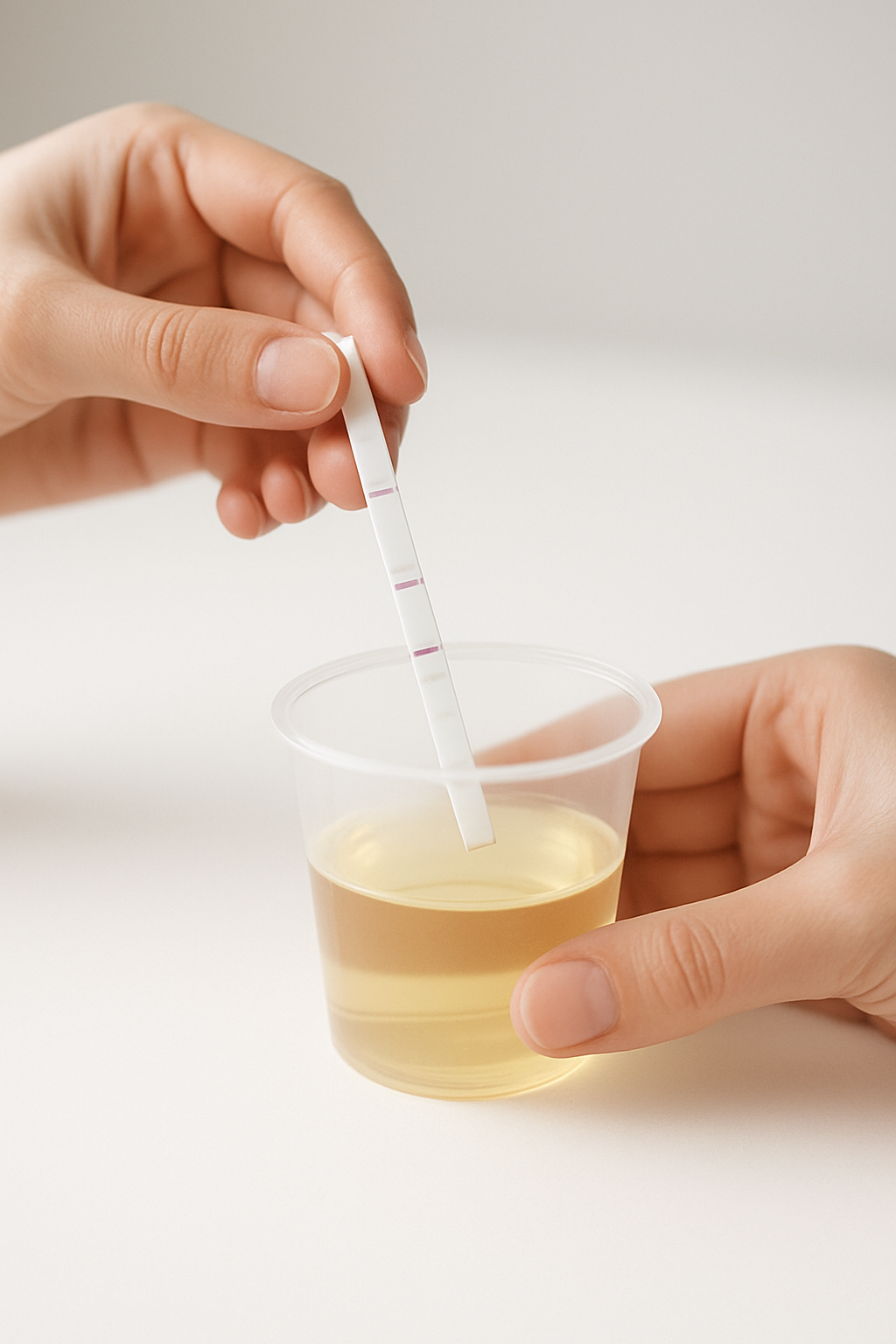
Once you have your urine sample, performing the test is straightforward. For test strips, dip the absorbent tip into the urine cup, ensuring you do not go past the maximum fill line. Hold it there for the duration specified in the instructions, usually 5 to 10 seconds. For digital tests, you will typically insert the test stick into the device first, then dip the absorbent tip into the urine or hold it in your urine stream, again following the manufacturer's specific timings.
After dipping, remove the strip or device and lay it flat on a clean, dry surface. Now comes the waiting period. It is crucial to respect the reaction time indicated in the instructions, which is typically 5 to 10 minutes. Do not read the results before or after the recommended window, as this can lead to inaccurate interpretations. Patience is truly a virtue here, as it ensures the chemical reaction has ample time to complete, giving you the most precise reading.
Reading Test Results (Positive, Negative, Faint Lines)
Interpreting your ovulation test results correctly is paramount to identifying your fertile window. Here is what each type of result means:
- Negative Result: For test strips, a negative result means the test line is lighter than the control line, or no test line appears at all. This indicates that an LH surge has not yet occurred. For digital tests, this will usually be a clear negative symbol, like an empty circle or a "no" reading. Keep testing daily!
- Positive Result: This is the result you are looking for! For test strips, a positive result means the test line is as dark as or darker than the control line. This indicates that your LH surge is happening. For digital tests, this will often be a smiley face, a clear "yes," or a flashing indicator showing high fertility transitioning to peak fertility. A positive result tells you that ovulation is likely to occur within the next 24 to 36 hours, signaling your most fertile days.
- Faint Lines: If you see a faint line on a test strip that is lighter than the control line, it is considered a negative result. A faint line simply means there is some LH present in your urine, which is normal throughout your cycle, but it is not yet at surge levels. It does not mean you are about to ovulate. Resist the temptation to consider a faint line positive; the test line must be as dark or darker than the control line to signify a true LH surge.
Remember, consistently following the instructions for reading your specific kit is vital. Comparing lines on paper strips requires a keen eye, which is why some individuals prefer the unambiguous digital displays. With practice, interpreting your test results will become second nature, empowering you with clearer insights into your cycle.
Understanding the Fertile Window and Timing Intercourse
Detecting your LH surge with an OPK is incredibly valuable because it directly points you towards your fertile window. Your fertile window is the period during your menstrual cycle when conception is possible. While an egg lives for only about 12 to 24 hours after ovulation, sperm can survive inside the female reproductive tract for up to 5 days (ACOG, 2020).
This biological reality means your fertile window actually spans about 6 days: the 5 days leading up to ovulation and the day of ovulation itself. The two most fertile days are typically the day of the LH surge and the day after. Therefore, once you get a positive OPK result, it is an optimal time to have intercourse. Engaging in intercourse on the day of your positive LH test and the following day maximises your chances of sperm being present when the egg is released.
It is important to remember that ovulation tests predict ovulation, they do not confirm it. Your body prepares for ovulation with the LH surge, but in rare cases, ovulation may not occur. However, for most women, a positive OPK is a very reliable indicator. By understanding this fertile window and strategically timing intercourse, you are actively participating in your fertility journey with intelligence and intent, rather than just hoping for the best.
Advantages and Limitations of Ovulation Tests
Ovulation tests are powerful allies in fertility planning, but like any tool, they come with both advantages and limitations. Understanding these can help you use them most effectively and manage your expectations.
Advantages:
- Precision: OPKs are highly effective at detecting the LH surge, offering a precise way to predict ovulation and identify your most fertile days, often more accurately than calendar methods alone.
- Empowerment: By providing clear, actionable information about your cycle, OPKs empower you to take an active role in your fertility journey. You gain a deeper understanding of your body's unique rhythms.
- Convenience: Most tests are easy to use at home, discreet, and readily available, making fertility tracking accessible without frequent clinic visits.
- Cost Effective: Compared to some other fertility treatments or extensive clinic monitoring, OPKs are a relatively inexpensive first step for many couples trying to conceive.
Limitations:
- Do Not Confirm Ovulation: While OPKs predict ovulation, they do not confirm that it actually happened. Occasionally, an LH surge may occur without an egg being released.
- May Be Tricky with Irregular Cycles: If you have very irregular menstrual cycles, conditions like Polycystic Ovary Syndrome (PCOS), or are going through perimenopause, you might experience multiple LH surges or consistently high LH levels, which can make interpretation challenging.
- Timing: Missing your daily testing window or not following instructions precisely can lead to inaccurate results.
- Not a Diagnostic Tool: OPKs are for fertility tracking, not for diagnosing underlying fertility issues. If you have concerns, it is always best to consult with a healthcare professional.
Despite these limitations, for many, the advantages of using ovulation tests far outweigh the drawbacks. They offer invaluable insight, transforming the often opaque process of conception into something more transparent and manageable.
Common Questions and Troubleshooting
It is natural to have questions as you navigate the world of fertility tracking. We are here to address some of the most common queries and offer troubleshooting tips to help you feel more confident and less confused.
Can Ovulation Tests Detect Pregnancy?
This is a frequent question, and the answer is a clear no. Ovulation tests are specifically designed to detect Luteinizing Hormone (LH), which surges before ovulation. Pregnancy tests, on the other hand, detect a completely different hormone: human chorionic gonadotropin (hCG). While both are hormones, their roles in the body and their detection by these specific tests are distinct. So, while you might feel a hopeful anticipation, an OPK will not give you information about pregnancy. For that, you need a dedicated pregnancy test.
What to Do if You Don’t Get Positive Results
Not getting a positive result on your ovulation test can be disheartening, especially when you are consistently testing. Before getting discouraged, let's explore some common reasons why this might happen and what steps you can take:
- Are you testing at the right time? Ensure you are testing consistently at the recommended time of day (often early afternoon) and not using first morning urine or overly diluted urine. Review the instructions for your specific OPK and adjust your testing window if needed.
- Are your cycles irregular? If you have irregular menstrual cycles, it can be much harder to predict your LH surge. You might need to test for a longer duration each cycle. Conditions like Polycystic Ovary Syndrome (PCOS) can cause multiple LH surges or persistently elevated LH, making OPK interpretation challenging.
- Is your LH surge subtle? Some individuals have a very short or subtle LH surge that might be missed if you are not testing frequently enough (e.g., twice a day during your expected fertile window).
- Are you past your ovulation window? It is possible you started testing too late in your cycle and already missed your LH surge.
- Are the tests expired or faulty? Always check the expiry date on your test kits.
If you have been consistently using OPKs for several cycles without detecting an LH surge, or if you have concerns about your cycle regularity, we strongly recommend consulting with a healthcare provider. They can help investigate potential underlying causes and offer personalised guidance.
Additional Fertility Tracking Methods
While ovulation predictor kits are incredibly useful, they are often most powerful when used as part of a more holistic approach to fertility tracking. Combining OPKs with other methods can provide a richer, more comprehensive understanding of your menstrual cycle and overall reproductive health.
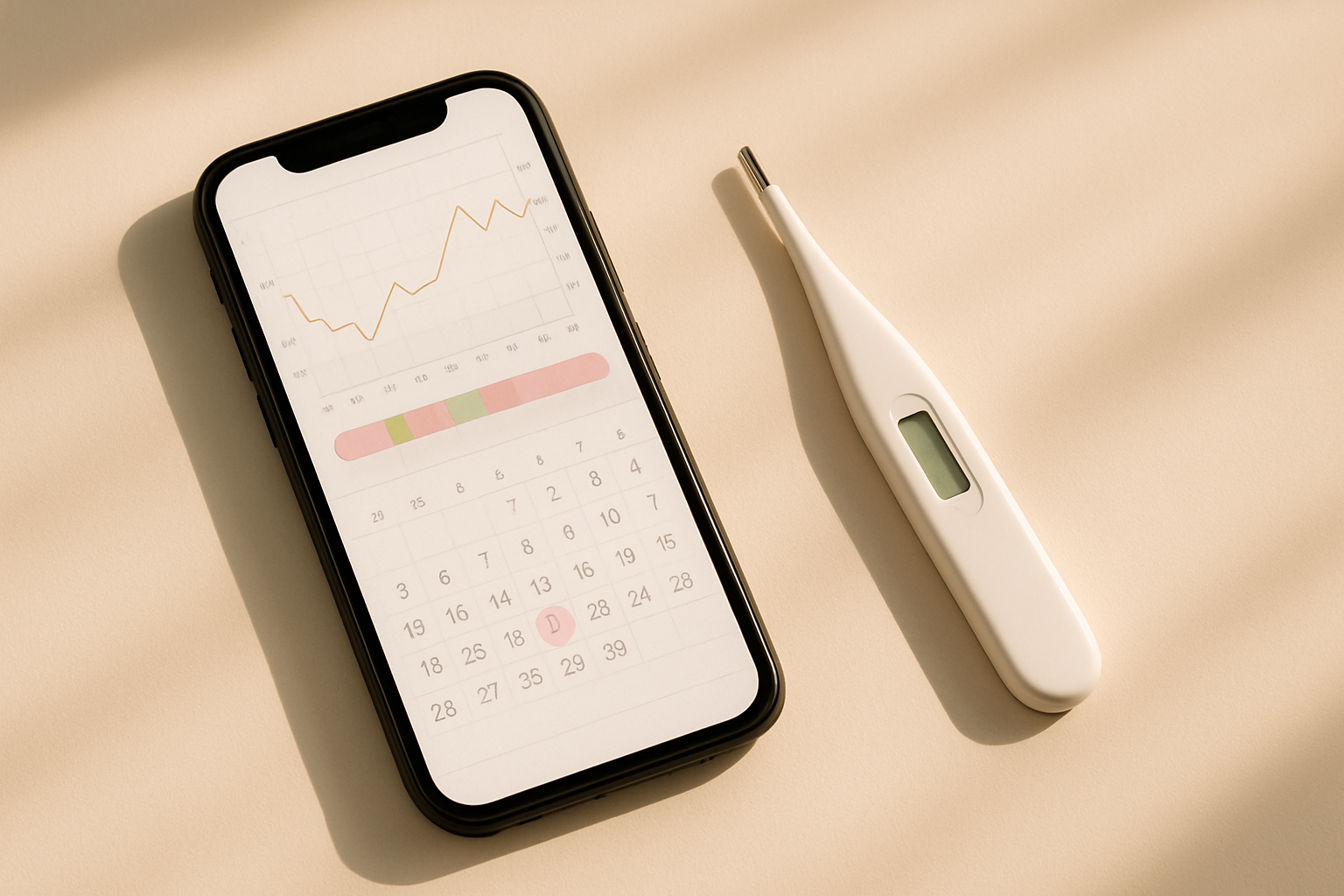
- Basal Body Temperature (BBT): BBT tracking involves taking your oral temperature first thing every morning before getting out of bed. After ovulation, there is a slight but sustained rise in your basal body temperature, typically by 0.2 to 0.5 degrees Celsius, due to increased progesterone levels. Unlike OPKs which predict ovulation, BBT charting *confirms* that ovulation has occurred. By charting your BBT alongside OPK results, you gain confirmation that your LH surge did indeed lead to ovulation.
- Cervical Mucus Monitoring: Your cervical mucus changes throughout your cycle in response to hormone fluctuations. Around ovulation, it typically becomes clear, stretchy, and resembles raw egg white. This "egg white cervical mucus" (EWCM) is optimal for sperm survival and transport. Learning to recognise these changes can be another powerful indicator of your fertile window, often appearing before an LH surge.
- Fertility Apps: Many excellent fertility apps are available that allow you to log your OPK results, BBT readings, cervical mucus observations, and even intercourse timing. These apps can help you visualise your cycle patterns, predict future ovulations, and track your progress over time. They act as a central hub for all your fertility data, making it easier to spot trends and understand your unique body.
- Ovulation Symptoms: Beyond physical signs, some women experience noticeable ovulation symptoms such as mild abdominal cramping (mittelschmerz), breast tenderness, or increased libido around the time of ovulation. Paying attention to these subtle cues can further enhance your understanding.
By integrating these methods, you are not just relying on a single data point. Instead, you are building a detailed picture of your fertility, empowering you with multifaceted insights that can truly accelerate your journey to conception. It is about understanding your body as a whole, not just one part of it.
Conclusion
Embarking on the journey to parenthood is a profound experience, and understanding your body is your greatest asset. Ovulation Predictor Kits are remarkable tools that offer clear, actionable insights into your fertile window, transforming guesswork into informed decisions. We have walked through how they work, how to use them correctly, and how to interpret their signals, all to empower you with confidence and clarity.
Remember, this path is unique for everyone, and your body communicates in its own specific ways. Whether you are diligently tracking or just starting to explore, every step you take to understand your reproductive health is a step towards your dream. You are not just tracking cycles; you are tuning into the incredible wisdom of your own body.
Improve your reproductive health with a personalised plan tailored to your body. When you join Izana, you are not just choosing a plan a you are becoming part of a movement that challenges myths, empowers choices, and builds healthier futures. Join the Revolution.