- 1Recognise implantation bleeding as light, pinkish or brownish spotting occurring 6 to 12 days after fertilisation, often before a missed period.
- 2Distinguish it from a regular period by its timing, much lighter flow, shorter duration (hours to a couple of days), and typically milder cramping.
- 3Understand that home pregnancy tests are most accurate when taken on or after the day of your expected period, as hCG levels need time to rise.
- 4Be aware that other factors like hormonal changes or infections can cause spotting, and heavy bleeding or severe pain warrants immediate medical consultation.
The Truth About Implantation Bleeding vs. Your Period
The journey to parenthood is often filled with anticipation, hope, and sometimes, a little bit of confusion. When you’re trying to conceive, every tiny signal from your body can feel like a profound message, leading you to wonder: is this it? One of the most common sources of this uncertainty comes from light bleeding or spotting, leaving many to puzzle over whether it’s just an early period or something far more significant: implantation bleeding.
We understand how overwhelming it can be to decipher your body's whispers, especially when so much is at stake. You're not alone in feeling this way. At Izana, we believe in empowering you with clear, trusted, and empathetic guidance so you can navigate your path with confidence. Let’s demystify the subtle but crucial differences between implantation bleeding and your regular period, helping you understand what your body might be telling you.
Here is a quick overview of what we will explore together:
- Implantation bleeding is light spotting that occurs when a fertilised egg attaches to the uterine lining, often a very early sign of pregnancy.
- Your period signifies the shedding of the uterine lining when pregnancy does not occur, resulting in a heavier, sustained flow.
- Key distinctions include timing (implantation bleeding typically happens 10 to 14 days after conception, before your expected period), colour (light pink or brown versus bright red), and duration (brief spotting versus several days of flow).
- Understanding these differences can help you manage your expectations and know when it’s the right time to take a pregnancy test.
- While spotting can be a normal part of early pregnancy, persistent heavy bleeding or severe pain warrants immediate medical attention.
What is Implantation Bleeding?
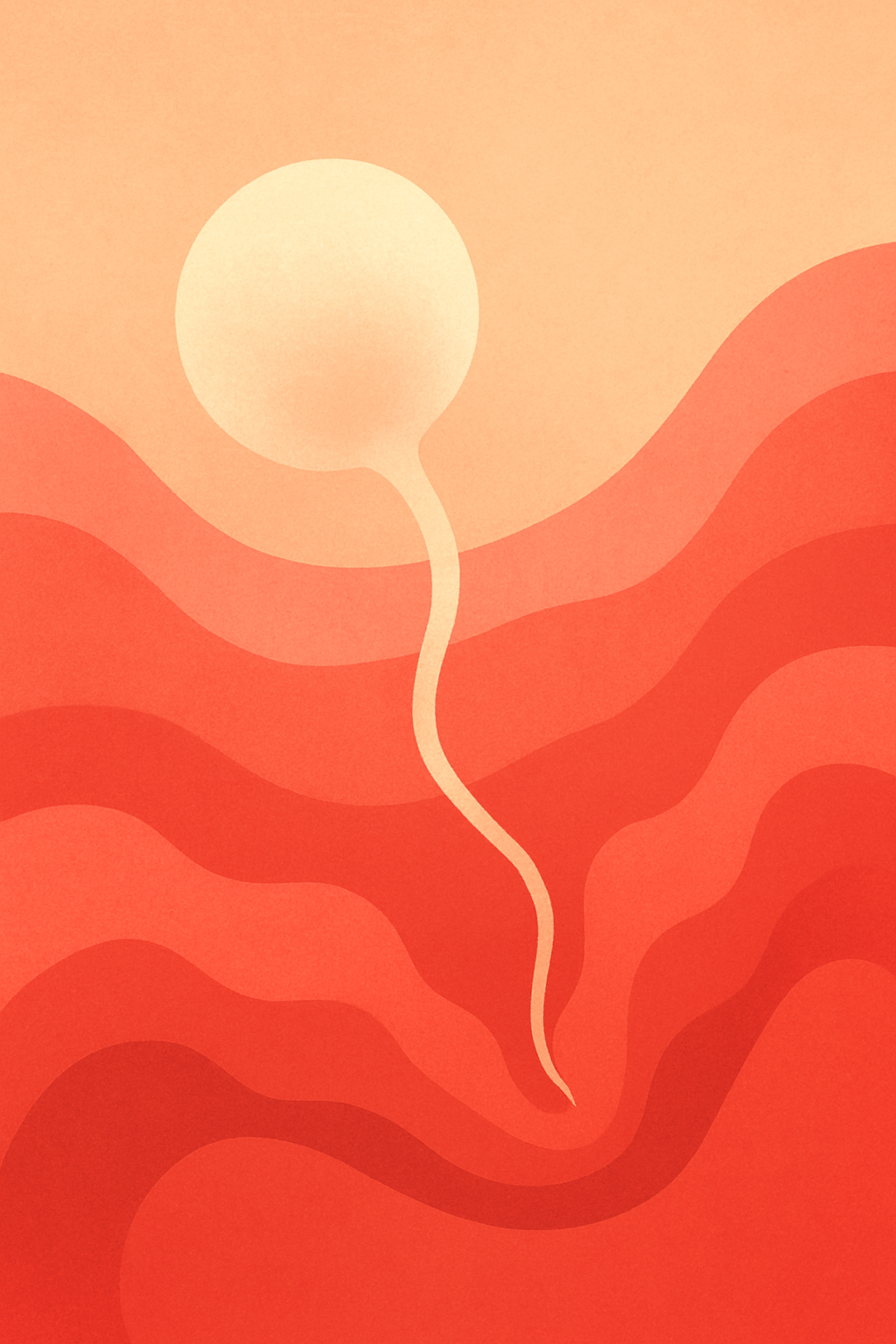
Once an egg is fertilised, it travels for about six to twelve days to the uterine lining. Implantation bleeding is a light spotting that can occur when this developing embryo successfully nestles itself into the uterine wall.
This process of embedding can sometimes cause a small amount of the delicate blood vessels in the uterine lining to break, leading to light spotting. This bleeding is typically not heavy or painful, and serves as an early signal that something special might be happening. It is a natural and normal part of conception for many women, though not everyone experiences it. If you do, it is often one of the earliest signs that something truly special might be happening within your body, even before a missed period.
What Happens During Your Period?
Now, let's contrast this with a more familiar monthly event: your period. Your menstrual cycle orchestrates hormonal changes each month, preparing your uterine lining, the endometrium, with blood vessels and nutrients for a potential pregnancy.
If a fertilised egg does not implant, or if conception does not occur, your body receives a signal that pregnancy has not happened. The levels of key pregnancy hormones, particularly progesterone, begin to drop. This hormonal shift triggers the shedding of that prepared uterine lining. It is like your body resetting, preparing for the next cycle.
This shedding of the uterine lining is what we experience as menstrual bleeding, or your period. It is a natural and regular part of the reproductive cycle for most women, signifying the end of one cycle and the beginning of another. The flow is typically heavier and more sustained than implantation bleeding, lasting for several days, and is often accompanied by a range of symptoms that many of us are all too familiar with.
Differences Between Implantation Bleeding and Period Bleeding
Deciphering the difference between these two types of bleeding can feel like detective work. While both involve blood, their characteristics, timing, and accompanying symptoms are usually distinct. Let’s break down the key differences to help you understand what might be happening.
Timing
This is often the most significant clue in distinguishing between implantation bleeding and your period. Implantation bleeding typically occurs much earlier than your expected menstrual period. It generally happens about 10 to 14 days after conception, which is roughly around the time you would normally be expecting your period, or even a few days before it is due. This places it around six to twelve days after ovulation and fertilisation.
Your regular period, however, arrives on a more predictable schedule based on your individual menstrual cycle length. If you have a 28 day cycle, you would expect your period around day 28. Early spotting a week or so before your period suggests implantation; bleeding on schedule and in its usual pattern points to your period.
Color and Flow
The visual characteristics of the bleeding can also provide vital clues. Implantation bleeding is almost always lighter in colour and flow compared to a typical period. It is often described as a light pink, brownish, or rust coloured spotting. It might appear as just a few drops when you wipe, or a very light stain on your underwear. It rarely fills a pad or a tampon, and is not usually bright red like fresh menstrual blood.
Conversely, your period bleeding typically starts as a light pink or brown discharge and gradually becomes brighter red, heavier, and more consistent over the first day or two. The flow often requires the use of sanitary pads or tampons, and it continues to be noticeable throughout the duration of your period. Small blood clots during your period are rare with implantation bleeding.
Duration
How long the bleeding lasts is another important factor. Implantation bleeding is generally very brief, often lasting only a few hours to a couple of days at most. It tends to be intermittent, meaning it might come and go, rather than being a continuous flow. It is not uncommon for it to be a one time event.
A menstrual period, on the other hand, typically lasts anywhere from three to seven days, with a more consistent flow throughout that time. While the heaviest days might be at the beginning, the bleeding usually continues for several days before tapering off. The sustained nature of the flow is a strong indicator of your period, particularly if it aligns with your usual cycle length.
Cramping and Symptoms
Both implantation and menstruation can be accompanied by cramping, but there are often subtle differences. Implantation cramps, if present, are usually mild and short lived. They might feel like a gentle tugging or a dull ache, much less intense than regular period pain, sometimes barely noticeable.
Period cramps, or PMS symptoms, are often more pronounced and widespread. They can range from mild discomfort to severe, debilitating pain, often accompanied by backache, bloating, headaches, and mood swings. These symptoms typically intensify as your period approaches and can persist for the first few days of bleeding. Other early pregnancy symptoms that might accompany implantation bleeding include breast tenderness, fatigue, and nausea, which are distinct from common PMS discomforts.
When Does Implantation Bleeding Occur?
Let’s get a bit more precise about the timing, as this is often the most confusing aspect. Implantation bleeding typically happens about six to twelve days after fertilisation. If you track ovulation, this typically falls around day 20 to 24 of a 28 day cycle, often before or right around your expected period, but usually not after.
This critical timing explains the confusion with an early period. If you had unprotected intercourse during your fertile window and then experience spotting in the subsequent week or two, implantation bleeding is a distinct possibility. Tracking your ovulation provides valuable insights.
How to Identify Implantation Bleeding vs. Period
We've walked through the key differences, but putting it all together to identify what is happening in your body can still feel challenging. To help you distinguish what is happening in your body, here is a checklist of key differences.
- Timing: Did the bleeding start days before your period was expected? Or is it right on schedule for your usual cycle? Early spotting points to implantation.
- Color: Is the blood light pink or brown, like old coffee grounds? Or is it bright, vibrant red, like fresh blood? Pink or brown suggests implantation.
- Flow: Is it very light spotting, just a few drops or streaks? Or is it a steady flow that requires sanitary protection? Spotting indicates implantation; a steady flow indicates a period.
- Duration: Did it last only a few hours or a day, possibly on and off? Or has it been continuous for several days? Short duration points to implantation.
- Cramping: Are the cramps very mild, perhaps a dull ache or flutter you can almost ignore? Or are they stronger, more persistent, and accompanied by other PMS symptoms? Mild cramps suggest implantation.
- Other Symptoms: Are you experiencing new symptoms like unusual fatigue, nausea, heightened sense of smell, or breast tenderness that are not typical for your PMS? These could be early pregnancy signs.
Remember, your body is unique. What one woman experiences might be different from another. The most important thing is to listen to your body and look for a combination of these signs. If you are tracking your menstrual cycle and ovulation, this information will become even more powerful in helping you interpret what you are seeing.
When to Take a Pregnancy Test
After all this careful observation, you are probably wondering: when is the right time to take a pregnancy test? Home pregnancy tests detect the human chorionic gonadotropin (hCG) hormone, produced after implantation.
For the most accurate results, we recommend waiting until at least the day your period is expected, or even a few days after a a missed period. While some tests claim to detect pregnancy very early, taking a test too soon, particularly immediately after potential implantation bleeding, might give you a false negative result. It takes time for hCG levels to build up in your urine (doubling every 48 to 72 hours), so waiting allows for sufficient rise.
If you experience implantation bleeding and then get a negative pregnancy test result, do not lose hope immediately. It might simply be too early. Wait a few more days, or even a week, and then take another test. If your period still hasn’t arrived and you continue to have early pregnancy symptoms, it is definitely worth retesting or consulting with a healthcare professional.
Other Causes of Bleeding
While focusing on implantation bleeding versus your period, it is crucial to acknowledge that light spotting can also stem from other factors. Understanding these can help you avoid anxiety and seek timely medical advice, ensuring you feel fully informed about your body's signals.
Common causes include hormonal fluctuations (e.g., birth control changes), ovulation spotting, or minor cervical irritation after intercourse or examination.
Persistent or unusual bleeding can signal more serious conditions. While not to alarm, knowing can empower. Bleeding could indicate a miscarriage (heavy, severe cramping), an ectopic pregnancy (requires immediate medical attention), or infections like pelvic inflammatory disease or STIs.
The key takeaway here is to pay attention to your body. While a little spotting can be harmless, especially when trying to conceive, unusual patterns or accompanying severe symptoms should always be discussed with a healthcare provider. Trust your intuition about what feels normal for your body.
When to See a Doctor
Knowing when to seek medical advice is paramount. While mild spotting can be normal, specific situations necessitate contacting your doctor. Your well being is our top priority.
We strongly encourage you to reach out to a doctor if you experience any of the following:
- Heavy Bleeding: If the bleeding becomes as heavy as a typical period, or heavier, and continues for more than a few days, it is important to get it checked.
- Severe Pain: Any intense, sharp, or persistent pain in your abdomen or pelvis, especially if it's localised to one side or radiates to your shoulder, should be immediately evaluated. This could indicate an ectopic pregnancy, which is a medical emergency.
- Passing Tissue or Clots: If you notice large blood clots or tissue being passed, it could be a sign of a miscarriage.
- Dizziness or Fainting: These symptoms, combined with bleeding, warrant immediate medical attention.
- Fever or Chills: These could indicate an infection.
- Persistent Confusion: If you are still unsure whether your bleeding is implantation or your period, and you are feeling anxious, reaching out to a professional can provide much needed clarity and peace of mind.
Remember, your doctor is your partner in this journey. They can perform tests, provide reassurance, and guide you on the best path forward, ensuring both your physical and emotional health are supported. Never hesitate to seek help when you feel something is not quite right or if you need clarity on your symptoms. Your peace of mind is invaluable.
Conclusion and FAQs
Navigating the nuances of your body's signals during the conception journey can feel like learning a new language. But with the right knowledge and a trusted guide, you can begin to understand these whispers with greater clarity and confidence. We hope this exploration of implantation bleeding versus your period has illuminated some of the uncertainties and empowered you with a clearer understanding of what to look for.
Remember, every symptom, every cycle, every experience is a unique chapter in your personal story. Being attuned to your body’s rhythm, observing changes in timing, colour, flow, and accompanying symptoms, can provide invaluable insights as you walk this path toward parenthood. You are taking proactive steps by seeking this knowledge, and that is truly powerful.
Frequently Asked Questions
Q: Can implantation bleeding be heavy?
A: No, implantation bleeding is typically very light spotting. It rarely becomes heavy enough to fill a sanitary pad or tampon and is generally much lighter than a regular menstrual period. If you experience heavy bleeding, it is important to consult a healthcare professional.
Q: How long after implantation bleeding can I take a pregnancy test?
A: For the most accurate results, it is best to wait until at least the day your period is expected, or a few days after a missed period. While implantation bleeding occurs early, it takes time for the hCG hormone to build up to detectable levels in your urine. Testing too early can lead to a false negative.
Q: Is implantation bleeding common?
A: While many women experience implantation bleeding, it is not universal. Studies suggest that only about 15% to 25% of pregnant women report experiencing some form of spotting during early pregnancy. Not having it does not mean you are not pregnant, and having it does not definitively confirm pregnancy until a test is positive.
Q: Can stress cause spotting that looks like implantation bleeding?
A: Yes, stress and hormonal imbalances can sometimes cause irregular spotting that might be confused with implantation bleeding. Other factors like intense exercise, changes in birth control, or certain medical conditions can also lead to light bleeding. Always consider your overall health and recent lifestyle changes.
Improve your reproductive health with a personalised plan tailored to your body. When you join Izana, you’re not just choosing a plan, you’re becoming part of a movement that challenges myths, empowers choices, and builds healthier futures. By understanding critical signs like implantation bleeding, you are already on your way to a more informed and empowered journey to parenthood. Join the Revolution.