- 1Adenomyosis involves endometrial tissue infiltrating the uterine wall, leading to an enlarged uterus and diffuse pain.
- 2Endometriosis is characterized by endometrial-like tissue growing outside the uterus on organs like ovaries and fallopian tubes.
- 3Both conditions cause severe menstrual pain, heavy bleeding, and can significantly impact fertility.
- 4Diagnosis for both relies on imaging tests like ultrasound and MRI, with surgical laparoscopy often confirming endometriosis.
- 5Treatment strategies vary, including pain relief, hormonal therapies, and surgical interventions, depending on the specific condition and individual needs.
Adenomyosis involves endometrial tissue growing into the muscular wall of the uterus, while endometriosis occurs when similar tissue grows outside the uterus, such as on the ovaries or fallopian tubes. Both conditions cause pelvic pain and heavy periods, but their distinct locations lead to different diagnostic approaches and treatment strategies.
- Adenomyosis is endometrial tissue within the uterine muscle, while endometriosis is outside.
- Both conditions often cause heavy periods, severe pain, and can impact fertility.
- Diagnosis relies on imaging tests like ultrasound and MRI, with surgery sometimes confirming endometriosis.
- Treatment options range from pain relief and hormonal therapy to surgical interventions.
- Understanding the difference helps tailor effective management and improves quality of life.
What is Adenomyosis?
Adenomyosis is a condition where the tissue that normally lines the uterus, known as the endometrial tissue, grows into the muscular wall of the uterus (the myometrium). This misplaced tissue continues to act as it normally would every month, thickening, breaking down, and bleeding during each menstrual cycle. However, because it is trapped within the uterine muscle, the blood and tissue have no way to exit the body, leading to inflammation, pain, and enlargement of the uterus.
What are the common symptoms of Adenomyosis?
Many women with adenomyosis experience heavy, prolonged menstrual bleeding (menorrhagia) and severe menstrual cramps (dysmenorrhea). This can lead to chronic pelvic pain, which may worsen during periods or even persist throughout the month. Other symptoms can include pain during intercourse (dyspareunia), bloating, and pressure on the bladder or rectum. For some, adenomyosis can also contribute to infertility or make conception more challenging.
We know how overwhelming a diagnosis can feel, especially when grappling with symptoms that disrupt your daily life. It is important to remember you are not alone in navigating this. We are here to help simplify what often feels complex.
What causes Adenomyosis and what are its risk factors?
The exact cause of adenomyosis is not fully understood, but several theories exist. One theory suggests that invasive growth of endometrial tissue from the lining of the uterus into the muscle wall occurs. Another proposes that developmental origins, where endometrial tissue is deposited in the uterine muscle during fetal development, might be a factor. Uterine trauma, such as from abortion or C-sections, has also been implicated as a potential risk factor, creating pathways for endometrial cells to invade the myometrium. Hormonal influences, particularly estrogen, are believed to play a significant role in the development and progression of adenomyosis. Women in their 30s and 40s are more commonly affected, though it can occur at any age.
How is Adenomyosis diagnosed?
Diagnosing adenomyosis often begins with a review of your symptoms and a physical examination. Imaging tests are crucial for diagnosis. A transvaginal ultrasound is often the first step, as it can reveal characteristic features such as a thickened uterine wall or cysts within the myometrium. Magnetic Resonance Imaging (MRI) provides more detailed images of the uterus and can help distinguish adenomyosis from other conditions like uterine fibroids. In some cases, a definitive diagnosis is only confirmed after a hysterectomy examines the uterine tissue microscopically, though this is less common for initial diagnosis.
What are the treatment options for Adenomyosis?
Treatment for adenomyosis aims to manage symptoms, as there is no definitive cure apart from hysterectomy, which removes the uterus entirely. Pain relief can be achieved with over-the-counter non-steroidal anti-inflammatory drugs (NSAIDs) for menstrual cramps. Hormonal therapy, such as oral contraceptives, progestin-only pills, or GnRH agonists, can help reduce bleeding and pain by suppressing menstrual cycles. Uterine artery embolization (UAE), a procedure that blocks blood flow to the affected areas of the uterus, is another option. In severe cases, a hysterectomy may be recommended, especially if fertility is not a concern and other treatments have failed. It is essential to discuss all options with your doctor to find the best approach for your specific situation.
What is Endometriosis?
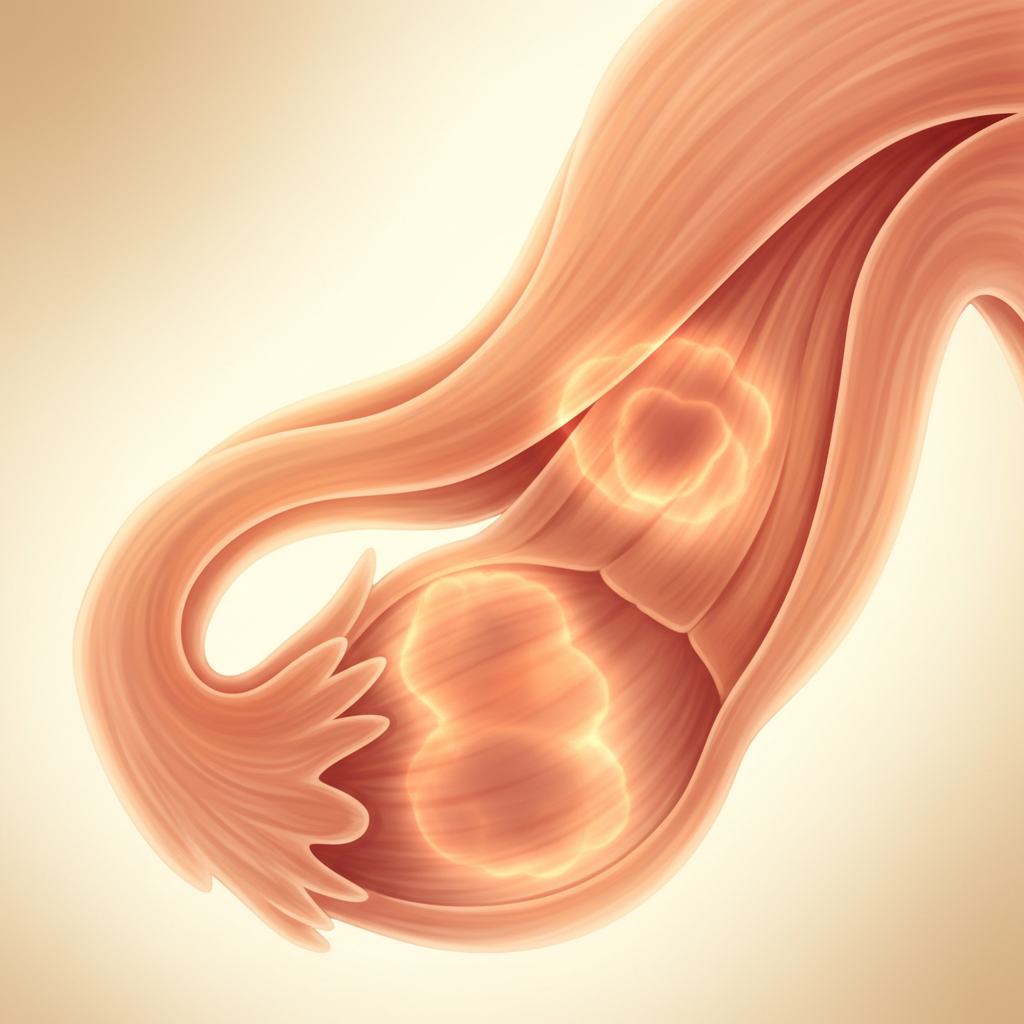
Endometriosis is a chronic condition where tissue similar to the lining of the uterus (the endometrium) grows outside the uterus. These growths, called implants or lesions, can be found on the ovaries, fallopian tubes, and other pelvic organs, and sometimes even in more distant locations. Like the uterine lining, these implants respond to hormonal changes during the menstrual cycle, thickening, breaking down, and bleeding. However, unlike menstrual blood, this blood has no way to exit the body, leading to inflammation, scar tissue formation, and debilitating pelvic pain.
What are the common symptoms of Endometriosis?
The most common symptom of endometriosis is chronic pelvic pain, which can be severe and may worsen during menstruation. Other symptoms include painful periods (dysmenorrhea), pain during or after sexual intercourse (dyspareunia), pain with bowel movements or urination, especially during periods, and unusually heavy periods. Endometriosis is also a significant cause of infertility, making it difficult for many women to conceive. Fatigue, bloating, and nausea can also be present.
What causes Endometriosis and what are its risk factors?
While the exact cause of endometriosis is not fully understood, several theories exist. The most widely accepted theory is retrograde menstruation, where menstrual blood containing endometrial cells flows backward through the fallopian tubes into the pelvic cavity instead of out of the body. Other theories include the transformation of peritoneal cells into endometrial-like cells, the spread of endometrial cells through the bloodstream or lymphatic system, and immune system dysfunction. Genetic factors are also believed to play a role, as endometriosis often runs in families. Exposure to higher levels of estrogen over a lifetime, early menarche, and shorter menstrual cycles are also considered risk factors.
How is Endometriosis diagnosed?
Diagnosing endometriosis can be challenging and often takes many years. It typically begins with a thorough medical history and a physical examination, including a pelvic exam. Imaging tests such as ultrasound and MRI can sometimes detect larger endometriomas (cysts on the ovaries) or deep infiltrating endometriosis. However, these tests may not always be conclusive for superficial implants. The gold standard for definitively diagnosing endometriosis is laparoscopy, a minimally invasive surgical procedure where a surgeon examines the pelvic organs directly and takes biopsies of any suspicious tissue for microscopic examination.
What are the treatment options for Endometriosis?
Treatment for endometriosis aims to manage pain, reduce the growth of endometrial implants, and improve fertility where desired. Pain management often involves over-the-counter NSAIDs or prescription pain medications. Hormonal therapy, including oral contraceptives, progestin therapy, GnRH agonists, and aromatase inhibitors, can help suppress ovulation and reduce symptoms by limiting estrogen production. For women struggling with infertility, fertility treatments such as IVF may be recommended. Surgical removal of endometriotic lesions through laparoscopy or open surgery can reduce pain and improve fertility. In severe cases, or if fertility is not a concern, a hysterectomy with removal of the ovaries (oophorectomy) may be considered, though this is not a cure for all types of endometriosis.
Adenomyosis vs Endometriosis: Key Differences and Similarities
While often confused due to their similar symptoms and involvement of endometrial tissue, adenomyosis and endometriosis are distinct conditions. Understanding these differences is crucial for accurate diagnosis and effective management. Let us explore the nuances.
Where do the growths occur in Adenomyosis and Endometriosis?
The primary difference lies in the location of the endometrial-like tissue. With adenomyosis, the endometrial tissue grows exclusively within the muscle walls of the uterus, causing the uterus to become enlarged and boggy. In contrast, endometriosis involves the growth of endometrial-like tissue outside the uterus. This tissue can be found on organs in the pelvic cavity, such as the ovaries, fallopian tubes, and the outer surface of the uterus, as well as on ligaments supporting the uterus, the bowel, or bladder. Rarely, it can appear in distant sites like the lungs or brain. This fundamental difference in location dictates many of their unique characteristics and the ways they manifest.
How do the pain patterns differ between Adenomyosis and Endometriosis?
Both conditions commonly present with severe pelvic pain, especially during menstruation, and very heavy periods. However, the nature of the pain can vary. Adenomyosis often presents with a more generalized, diffuse uterine pain and pressure, which can sometimes feel like an aching or throbbing sensation. The uterus may also feel tender to the touch. Endometriosis pain tends to be more localized depending on where the implants are. It can manifest as sharp, stabbing pain, particularly during periods, or specific pain during intercourse, bowel movements, or urination. Chronic pain, independent of menstruation, is also common in both, but its specific characteristics can hint at the underlying condition.
It is worth noting that while pain is a common thread, its intensity and specific location can be crucial clues for a clinician. Understanding these subtle differences empowers you to better describe your symptoms to your doctor.
How do these conditions impact fertility?
Both adenomyosis and endometriosis can significantly impact fertility, but through different mechanisms. Adenomyosis can affect fertility by altering the uterine environment, potentially interfering with embryo implantation or increasing the risk of miscarriage. The enlarged and inflamed uterus may not provide an optimal environment for pregnancy. Endometriosis, meanwhile, can cause infertility by affecting the function of the ovaries and fallopian tubes, leading to blocked tubes, impaired egg release, or reduced egg quality. It can also cause inflammation in the pelvic cavity, creating an environment that is hostile to sperm and egg interaction. The severity and location of the endometrial implants often correlate with the degree of fertility impairment.
Can Adenomyosis and Endometriosis coexist?
Yes, it is possible for adenomyosis and endometriosis to coexist in the same individual. Studies suggest that a significant percentage of women diagnosed with one condition may also have the other. This co-occurrence can lead to more severe symptoms and complicate diagnosis and treatment. When both conditions are present, the combination of internal uterine challenges and external pelvic inflammation can further exacerbate pain, bleeding, and fertility issues. This highlights the importance of thorough evaluation and a comprehensive understanding of a person's symptoms to ensure all underlying conditions are identified and addressed.
Living with Adenomyosis and Endometriosis
Living with chronic conditions like adenomyosis and endometriosis can be incredibly challenging, both physically and emotionally. It is a journey that often requires resilience, patience, and a proactive approach to managing your health. Remember, you do not have to walk this path alone. Support, understanding, and informed choices can make a significant difference to your quality of life.
How can I manage symptoms and improve my quality of life?
Managing the symptoms of adenomyosis and endometriosis involves a multifaceted approach tailored to your unique needs. Pain relief is often a priority, utilizing medications ranging from NSAIDs to stronger prescription options, as discussed with your doctor. Hormonal therapies can significantly reduce menstrual bleeding and pain by suppressing the growth of endometrial tissue. Lifestyle adjustments, such as a balanced diet and regular gentle exercise, can help manage inflammation and improve overall well-being. Stress reduction techniques, like yoga or meditation, are also beneficial in coping with chronic pain. Building a strong support system of friends, family, or support groups can provide invaluable emotional comfort.
What questions should I ask my clinic?
- What specific diagnostic tests are most appropriate for my symptoms?
- What are all the available treatment options, and what are their potential side effects or success rates?
- How might my condition impact my fertility, and what are my options for family planning?
- Are there any lifestyle or dietary changes that could help manage my symptoms?
- What follow-up care or monitoring will be recommended after treatment?
Sources
- Adenomyosis and Endometriosis: Two Sides of the Same Coin?, The Indian Journal of Obstetrics and Gynecology Research, accessed 2023-10-26
- Adenomyosis FAQ, American College of Obstetricians and Gynecologists, accessed 2023-10-26
- Endometriosis Key Facts, World Health Organization, accessed 2023-10-26
Improve your reproductive health with a personalised plan tailored to your body. When you join Izana, you are not just choosing a plan, you are becoming part of a movement that challenges myths, empowers choices, and builds healthier futures. Join the Revolution!